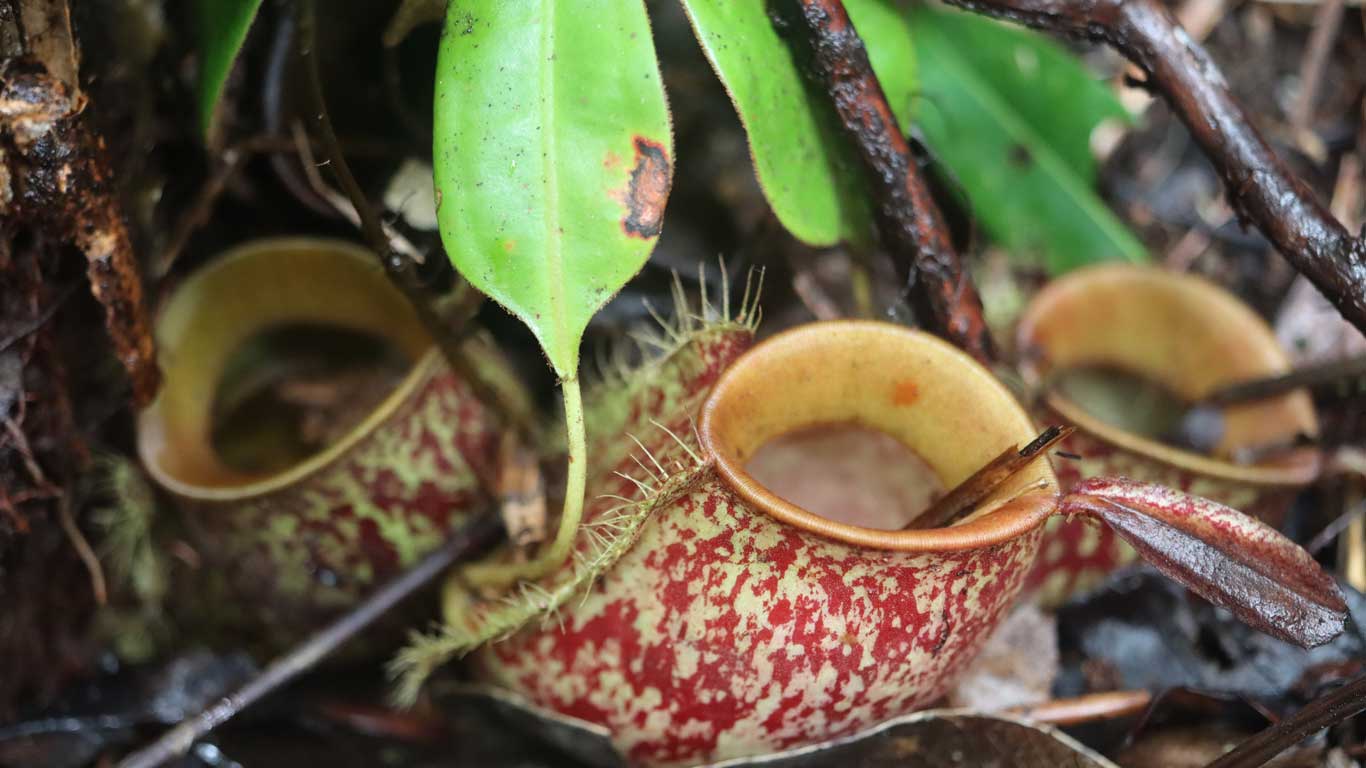
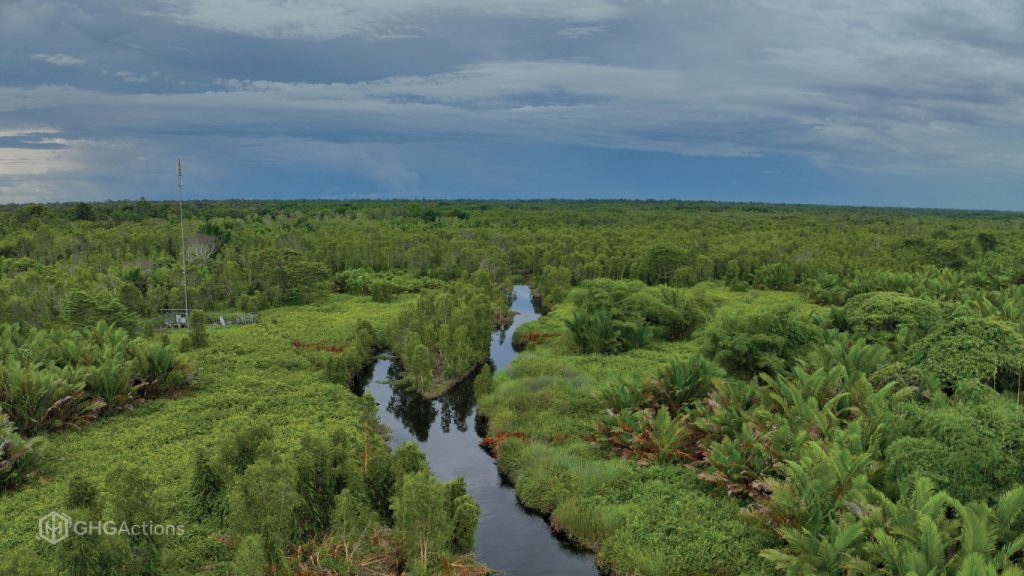
Somewhere on the floor of a Papuan peat swamp, an ant is taking its last walk. It’s been lured by the sweet scent of nectar trickling from the rim of a waxy, bulbous cup. One misstep on that slick lip — and it’s over. The ant tumbles into a pool of digestive fluid, where enzymes will slowly dissolve it into a nitrogen meal for a plant that has been waiting, motionless, for weeks.
Welcome to the quiet, carnivorous underworld of Papua’s peatlands.
In tropical peatland ecosystems, measuring carbon alone is no longer enough.
Increasingly, biodiversity indicators are becoming essential for demonstrating ecosystem integrity within MRV (Measurement, Reporting, and Verification) frameworks tied to conservation and carbon projects.
When discussing biodiversity monitoring in Papua, attention is often directed toward birds, mammals, or large forest vegetation. Yet some of the most informative ecological indicators can be found much closer to the forest floor: carnivorous plants.
Across Papua and the broader New Guinea region, carnivorous plants naturally occur in nutrient-poor peatlands, wet heath forests, sago swamp margins, montane seepage zones, and waterlogged peatland ecosystems. Because these habitats are highly sensitive to hydrological change and nutrient disturbance, the presence of certain carnivorous plant species can provide important signals about ecosystem condition and peatland integrity.
This has positioned carnivorous plants as useful indicators not only for biodiversity research, but also for conservation monitoring, baseline ecological inventories, and MRV biodiversity metrics associated with peatland and nature-based projects.
Papua hosts carnivorous plants from four genera across four families: Nepenthes (pitcher plants [Nepenthaceae]), Drosera (sundews [Droseraceae]), Utricularia (bladderworts [Lentibulariaceae]), and Byblis (rainbow plants [Byblidaceae]). Unlike ordinary plants, these species capture and digest insects and microscopic invertebrates to compensate for extremely low nutrient availability in the soils where they grow.
Among the best known are the tropical pitcher plants of the genus Nepenthes. New Guinea supports approximately eleven recognized species, several endemic to the island. Species associated with Papua, Raja Ampat, and the broader New Guinea region include Nepenthes ampullaria, N. insignis, N. mirabilis, N. maxima, N. neoguineensis, N. papuana, N. klossii, N. treubiana, N. misoolensis, N. danseri, and N. paniculata.
Several of these species are closely associated with intact peat and wetland systems. Nepenthes ampullaria commonly grows on rainforest floors and peat-associated habitats, while N. mirabilis is widespread in lowland wetlands and swamp margins. Nepenthes insignis and N. neoguineensis are known for producing exceptionally large pitchers reaching up to 30 centimeters. In contrast, species such as N. klossii and N. paniculata occur in higher-elevation montane environments, reflecting Papua’s remarkable ecological gradients from coastal swamps to cloud forests.
Papua also supports several species of sundews (Drosera spp.), including Drosera burmannii, D. indica, D. peltata, and D. petiolaris. These plants trap insects using sticky glandular hairs covering their leaves. Drosera petiolaris has been recorded from southern Papua, including Merauke, while another Papuan record includes Drosera rotundifolia subsp. bracteata.
In wet soils, shallow waters, and seasonally inundated habitats, bladderworts (Utricularia spp.) add another layer of carnivorous plant diversity. Species recorded from Papua include Utricularia chrysantha, U. muelleri, U. pulchra, U. minutissima, U. capillacea, and U. gibba. These plants use highly specialized suction traps to capture microscopic aquatic prey.
Southern Papua also hosts Byblis liniflora, commonly known as the rainbow plant, which is currently the only Indonesian representative of the family Byblidaceae. The species has been recorded from Merauke and surrounding wet lowland habitats.
From a conservation and MRV perspective, these plants are especially valuable because many are strongly associated with conditions — ecosystems that remain naturally nutrient-poor and hydrologically intact. In field surveys and biodiversity inventories, observations of Nepenthes sp., terrestrial Utricularia sp., Drosera burmannii, D. petiolaris, and related wetland flora may help indicate stable peat hydrology, undisturbed peat systems, and intact wet-heath habitats.
As biodiversity frameworks increasingly move beyond simple species counts, ecological indicator species are becoming more important in demonstrating habitat quality and ecosystem functionality. In Papua’s peatlands and swamp forests, carnivorous plants may therefore serve as practical biodiversity co-benefit indicators within broader conservation, ecosystem service, and climate-related monitoring programs.
Far from being botanical curiosities, Papua’s carnivorous plants reflect the ecological integrity of some of the island’s most important wetlands — ecosystems that support biodiversity, regulate water systems, and store globally significant carbon reserves.