 The voluntary carbon market (VCM) is entering a new phase. What once prioritized scale and volume is now moving toward something more selective: quality, credibility, and verifiable impact.
Between 2025 and 2026, this shift became more pronounced. Buyers are no longer simply looking for offsets—they are scrutinizing integrity, methodology, and long-term outcomes. At the same time, geopolitical instability and regulatory developments, particularly in countries like Indonesia, are reshaping both risks and opportunities in the market.
For organizations navigating this space, the question is no longer just whether to participate in the VCM, but how to do so credibly.
Global VCM Trends: A Structural Shift Toward Quality
The numbers tell a nuanced story. The global VCM spot market reached approximately $1.04 billion in 2025, with average prices around $6.10 per ton. Retirement volumes saw a slight dip compared to 2024, but this does not signal decline—instead, it reflects a deeper structural transition.
A key factor is the growing surplus of unretired credits, approaching 1 billion tons by the end of 2024. This oversupply continues to suppress prices for lower-quality avoidance credits, particularly legacy REDD+ projects, which are now commonly traded at $2–6 per ton.
At the same time, high-integrity credits—especially removals—are moving in the opposite direction. Biochar credits are trading around $177 per ton, while Direct Air Capture (DAC) credits can exceed $500 per ton.
Another clear signal: buyers are prioritizing recency and credibility. Premiums for newer vintage credits have risen significantly compared to older issuances, reinforcing a broader market preference for transparency, traceability, and robust methodologies.
Indonesia’s Inflection Point: Real Momentum, Real Constraints
Indonesia is entering a pivotal moment in its carbon market development.
The issuance of Presidential Regulation No. 110/2025 on Nilai Ekonomi Karbon (NEK) marks a significant shift in governance. It introduces a more integrated framework, including the Sistem Registri Unit Karbon (SRUK), and signals readiness to reopen international carbon trading by mid-2026.
At the same time, the domestic market is still finding its footing. Since its launch in 2023, IDXCarbon has recorded approximately 1.6 million tCO₂e in transactions, equivalent to around IDR 77.95 billion. While this is a meaningful start, liquidity remains relatively low compared to international benchmarks.
A major development is the Mutual Recognition Agreement (MRA) between Indonesia and Verra, which opens the door for dual registration of projects. This has immediate implications for previously stalled REDD+ projects, including large-scale initiatives where prices have begun to recover to around $9–9.70 per ton.
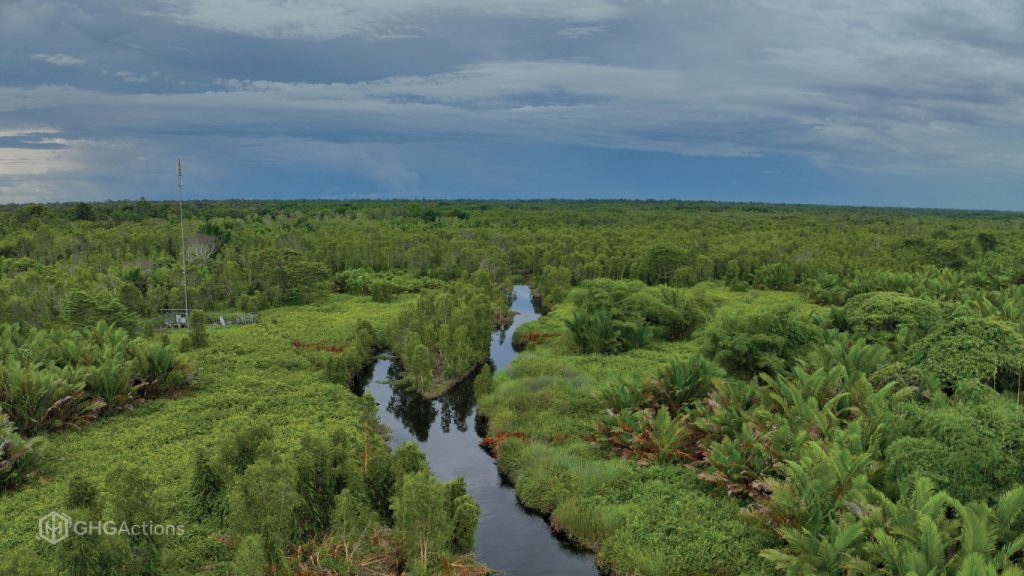
More broadly, Indonesia’s natural assets—tropical forests, peatlands, and mangroves—position it strongly within the global demand for nature-based solutions (NBS). However, translating this potential into consistent, high-integrity supply remains a work in progress.
Geopolitical Pressures: Volatility and Opportunity
The VCM does not operate in isolation. Recent geopolitical developments—particularly the Iran–Israel–US conflict—are having ripple effects across energy markets and, indirectly, carbon markets.
With Brent crude reaching $112–120 per barrel and disruptions affecting up to 20% of global oil flows through the Strait of Hormuz, energy costs have surged.
This creates a paradox.
In the short term, financial volatility and rising operational costs can constrain corporate ESG budgets. In the medium term, however, higher fossil fuel prices improve the relative competitiveness of low-carbon solutions, including carbon credits—especially those linked to credible, nature-based mitigation.
Meanwhile, policy uncertainty—such as the rollback of US climate commitments in 2025—adds another layer of complexity. Yet historically, the VCM has proven resilient, largely driven by corporate demand rather than government mandates.
At COP30 in Belém, Brazil, this direction was reinforced. The Forest & Climate Roadmap and increasing operationalization of Article 6 mechanisms are expected to strengthen demand for high-integrity credits, particularly from developing countries.
What This Means in Practice
Across all these developments, one theme stands out: the market is becoming more selective.
Low-integrity credits are increasingly sidelined, while projects that can demonstrate strong methodologies, transparent data, and measurable co-benefits are gaining traction. This is particularly relevant for REDD+ and broader NBS projects, where the transition to newer methodologies such as VM0048 is raising both costs and expectations.
For project developers and buyers alike, this means:
- Pricing assumptions need to reflect higher integrity requirements
- Engagement with compliance-linked markets (e.g., CORSIA, Article 6) is becoming more relevant
- Co-benefits—biodiversity, community outcomes—are no longer optional, but central to value
In this environment, credibility is not a branding exercise. It is a technical and operational requirement.
The voluntary carbon market is not shrinking—it is recalibrating.
As standards tighten and scrutiny increases, the gap between low- and high-integrity credits will continue to widen. For organizations engaging with the market, this creates both risk and opportunity. The ability to navigate this landscape will depend less on access, and more on understanding of methodologies, regulatory systems, and on-the-ground realities.
Sources:
- Ecosystem Marketplace, State of the Voluntary Carbon Market 2025: https://www.ecosystemmarketplace.com/publications/2025-state-of-the-voluntary-carbon-market-sovcm/
- World Bank, State and Trends of Carbon Pricing 2025: https://www.worldbank.org/en/publication/state-and-trends-of-carbon-pricing
- AlliedOffsets, VCM Overview 2025: https://alliedoffsets.com/wp-content/uploads/2025/12/2025-VCM-Overview-Report.pdf
- Ministry of Environment and Forestry (Indonesia): https://www.kehutanan.go.id/news/perpres-110-tahun-2025-perkuat-kedaulatan-negara-dalam-pengelolaan-karbon-dan-hutan-berkelanjutan
- Reuters: https://www.reuters.com/sustainability/climate-energy/indonesia-allows-resumption-international-carbon-trade-after-four-years-2025-10-15/
- Fastmarkets: https://www.fastmarkets.com/insights/carbon-market-updates-indonesia-verra-agreement-unlocks-redd-potential-amid-carbon-market-constraints/
- World Economic Forum: https://www.weforum.org/stories/2026/03/iran-conflict-disrupts-oil-and-gas-supply-top-energy-stories-march-2026/
- CNBC: https://www.cnbc.com/2026/03/22/oil-prices-are-set-to-rise-further-as-war-in-the-middle-east-escalates.html
- Carbon Brief: https://www.carbonbrief.org/debriefed-13-march-2026-war-and-oil-why-gas-drives-electricity-prices-japans-vulnerability-to-iran-crisis/
- COP30 Official: https://cop30.br/en/news-about-cop30/cop30-landmark-outcomes-emerge-from-negotiations-despite-unprecedented-geopolitical-tensions